Let’s be honest. Nobody calls a flooring contractor because things are going great. You’re calling because the floor is cracking, dusty, or someone nearly slipped near the loading dock last week. Maybe you’ve already patched the same spot twice and it keeps coming back.
If you’ve been typing “warehouse flooring near me” into Google at 9pm, you’re not alone. Many Pennsylvania warehouse owners are in the same exact spot. The good news is that once you understand what to look for, the decision gets a lot clearer. This guide will help you get there without the runaround.
Here’s the Thing About Bad Coating Jobs
Nobody sets out to get a bad floor coating. It usually happens because someone picked the cheapest quote, or a contractor oversold a product that wasn’t right for the space, or the prep work got rushed to save time.
Here’s what that ends up looking like a year or two later:
- Coating peeling up near the dock doors where traffic is heaviest
- Bubbles forming in patches where moisture pushed through the slab
- Edges lifting because the concrete was never properly ground before application
You’re back to square one, except now you’re also paying to remove the failed coating first.
It’s a frustrating cycle, and it’s more common than it should be. The fix isn’t finding a cheaper contractor; it’s understanding what your floor actually needs before anyone shows up with a bucket.
What a Good Warehouse Floor Coating Actually Does for You
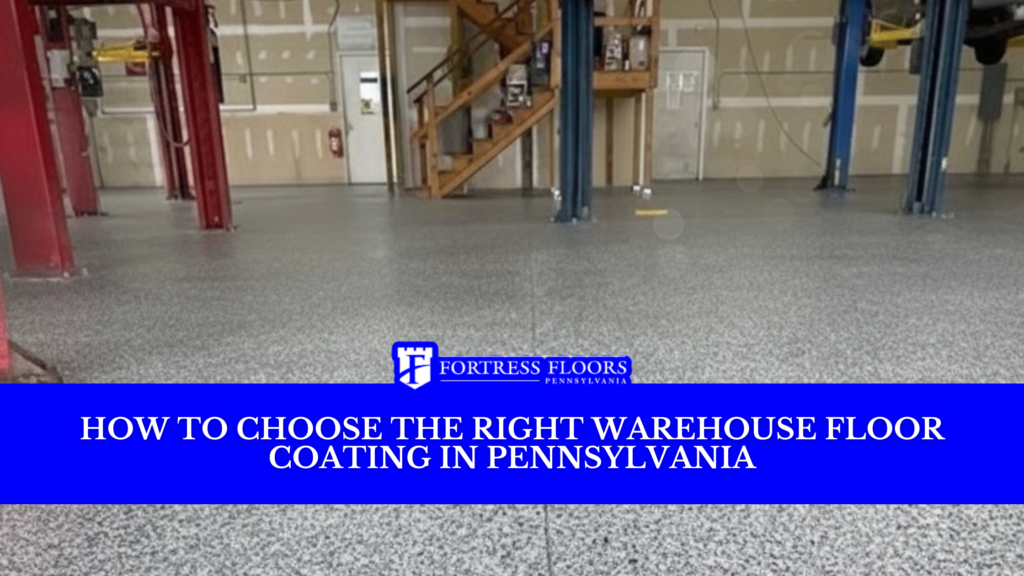
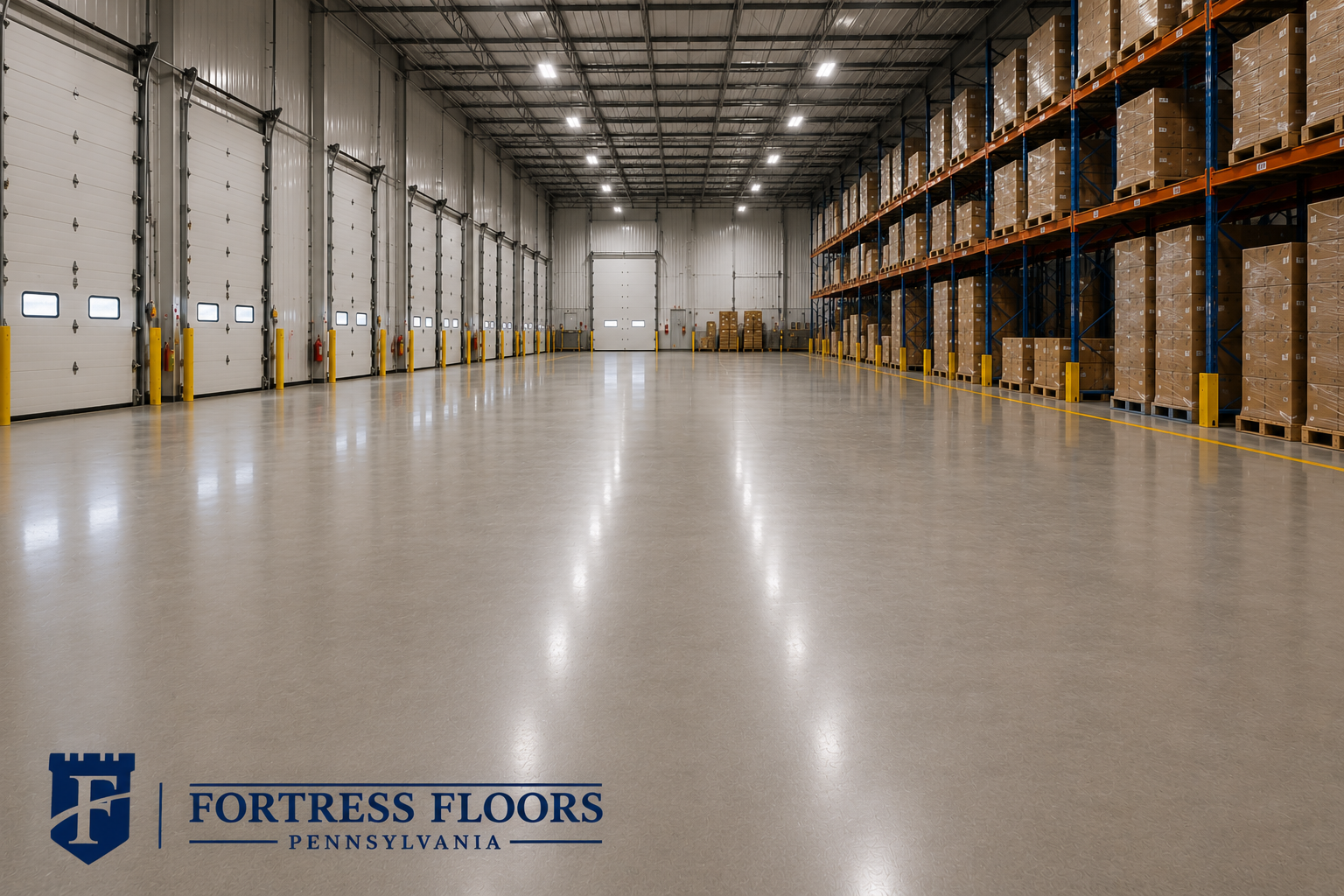
Here’s something worth knowing: bare concrete is not a finished floor. It’s porous, it absorbs everything that lands on it, and it breaks down steadily under traffic and temperature changes. Most people don’t realize how much their floor is working against them until they see what a properly coated slab looks like.
A quality warehouse floor coating does a few things that bare concrete simply can’t:
- Locks out oils, chemicals, and moisture before they soak into the slab
- Gives workers a surface with real traction, not just smooth worn concrete that gets slippery when wet
- Makes your daily cleanup a 10-minute job instead of an hour-long battle
- Protects the concrete underneath so you’re not constantly patching and repairing
- Gives your facility a clean, professional look that’s easy to maintain
This isn’t a cosmetic upgrade; it’s a practical investment that pays for itself in reduced maintenance, fewer safety incidents, and a floor that actually holds up to the work you put it through.
What You Need to Think About Before Picking a Coating
Every warehouse is different, and this is where a lot of people go wrong. Someone recommends a product, you go with it, and six months later you realize it was never right for your space. Before you talk to any contractor, run through these honestly:
How hard does your floor actually work?
- Forklifts running full shifts put serious stress on a coating. Light foot traffic is a completely different situation.
- Heavy pallet racking concentrates load in fixed spots. Not every coating handles that equally well.
- If your floor is working hard, you need a system built for that. A light-duty product will show its age fast.
What does your floor come into contact with?
- Oil and hydraulic fluid behave differently than food-grade cleaning chemicals or caustic solvents.
- Some coatings resist petroleum products well but wear faster under alkaline cleaners used in food facilities.
- Tell your contractor specifically what your floor deals with. A good one will factor that into their recommendation.
How much downtime can you actually afford?
- Some coatings need a full day or more to cure before you can drive on them again.
- If your operation runs six days a week, that’s a real cost to factor in.
- Faster-curing options exist and they’re worth the extra investment if your schedule doesn’t allow for long shutdowns.
Who’s going to maintain this floor?
- Some systems need resealing every couple of years to stay in top shape.
- Others are genuinely low-maintenance for a decade or longer.
- Be realistic. A coating that needs regular attention but doesn’t get it will deteriorate faster than one that’s self-sufficient by design.
The Coating Options That Actually Work for Pennsylvania Warehouses
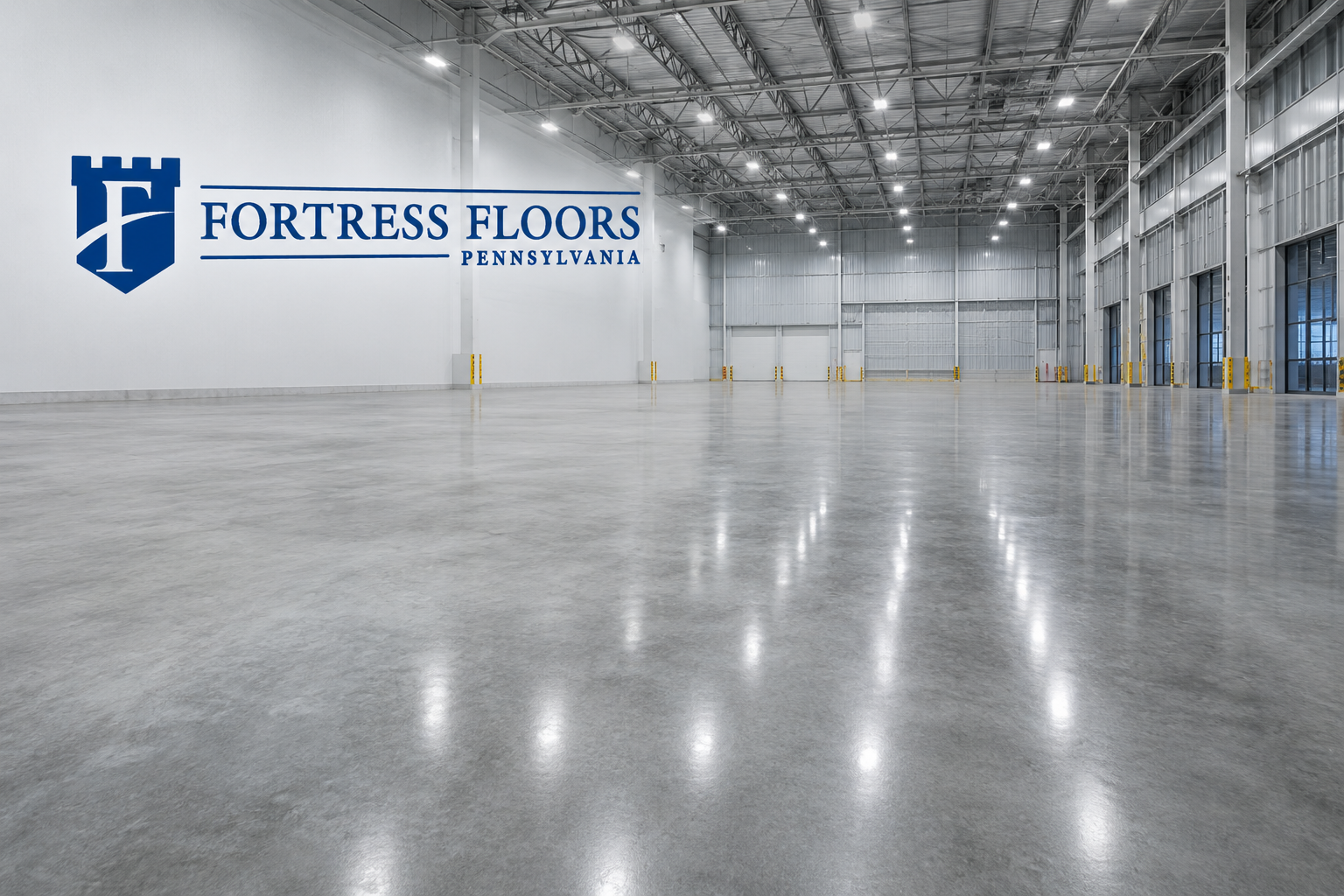
A lot of warehouse owners come in asking about epoxy because it’s the most well-known name in the industry. We get it. But after working on commercial and industrial floors across Pennsylvania for over two decades, we stopped installing epoxy for a straightforward reason: better options exist. Epoxy is temperature-sensitive during application, takes up to 72 hours to cure, and yellows over time under UV exposure. For a working warehouse in Pennsylvania, those are real problems, not minor footnotes.
Here is what we actually recommend for concrete warehouse flooring projects:
Polyaspartic Coatings
- The strongest and most durable warehouse floor coating available today
- Cures in just a few hours so your facility is back in operation the same day
- Holds up under heavy forklift traffic, pallet jacks, and constant daily use
- Resists chemicals, oils, and spills without breaking down
- Stays color-stable under UV light with no yellowing over time
- Works reliably in Pennsylvania’s cold winters and humid summers
- 4x stronger than traditional epoxy coatings
Why Pennsylvania Weather Is Actually a Big Deal
This is the part that out-of-state contractors often get wrong. Pennsylvania weather is not gentle. You get cold, wet winters, humid summers, and spring days that swing 30 degrees between morning and afternoon.
That affects your floor in a few specific ways:
- Concrete expands and contracts with temperature. A coating that can’t move with the slab will eventually crack or lift at the seams.
- Pennsylvania humidity means there’s often moisture vapor pushing up through the slab, especially in older buildings. If that isn’t accounted for before the coating goes down, it will cause the coating to fail from underneath.
- Cold-weather installations need careful management. Many coatings have minimum temperature requirements for curing properly, and a cold unheated warehouse slab in January may not meet them even if the air temperature feels fine.
A contractor who has worked in Pennsylvania facilities through different seasons understands this. It’s not something you learn from a product spec sheet.
Signs That Your Floor Is Telling You Something
Most warehouse floors don’t fail overnight. The signs show up gradually, and it’s easy to put them on the back burner until something forces the issue. Here’s what to pay attention to:
- Peeling or bubbling in the existing coating: This means the bond has broken down. Re-coating over it without addressing the cause will give you the same result.
- Cracks that have appeared or widened: The slab may be shifting. That needs to be evaluated before any new coating goes down.
- Fine concrete dust that keeps coming back: The surface is breaking down and that dust is getting into your equipment, your product, and the air your team breathes.
- Stains you can’t clean off no matter what you use: The concrete has gone porous and is absorbing rather than shedding contaminants.
- Slick spots near dock doors or wash-down areas: This isn’t a minor inconvenience. It’s a safety issue that warrants a real fix, not a rubber mat thrown over it.
If you’re nodding at two or more of these, the floor is past the point of monitoring.
How to Find a Good Warehouse Floor Coating Contractor
Searching “warehouse flooring near me” in Pennsylvania will give you plenty of options. Sorting through them takes a little more work than checking reviews. Here’s what actually separates a reliable contractor from the rest:
- They want to see your floor before they quote it. Anyone giving you a firm number over the phone without a site visit is guessing. The condition of your concrete changes everything from the prep work required to the product that makes sense.
- Ask about surface preparation specifically. Find out exactly how they prepare the concrete before coating. Diamond grinding or shot blasting is what opens up the surface so the coating bonds properly. Vague answers here are a red flag.
- They have real experience with commercial and industrial work. Residential garage floors and working warehouses are different projects. Ask specifically about their commercial portfolio.
- Clear answers about products matter. A professional should tell you exactly what coating system they are recommending and give you solid reasons why it suits your specific facility.
Fortress Floor Coatings of Pennsylvania has been working with warehouse owners and business clients across the Plymouth Meeting area and surrounding communities for over two decades. We assess each facility on its own terms and give straightforward recommendations based on what the floor actually needs, not just what’s easiest to install.
Why Getting the Installation Right Matters More Than the Product
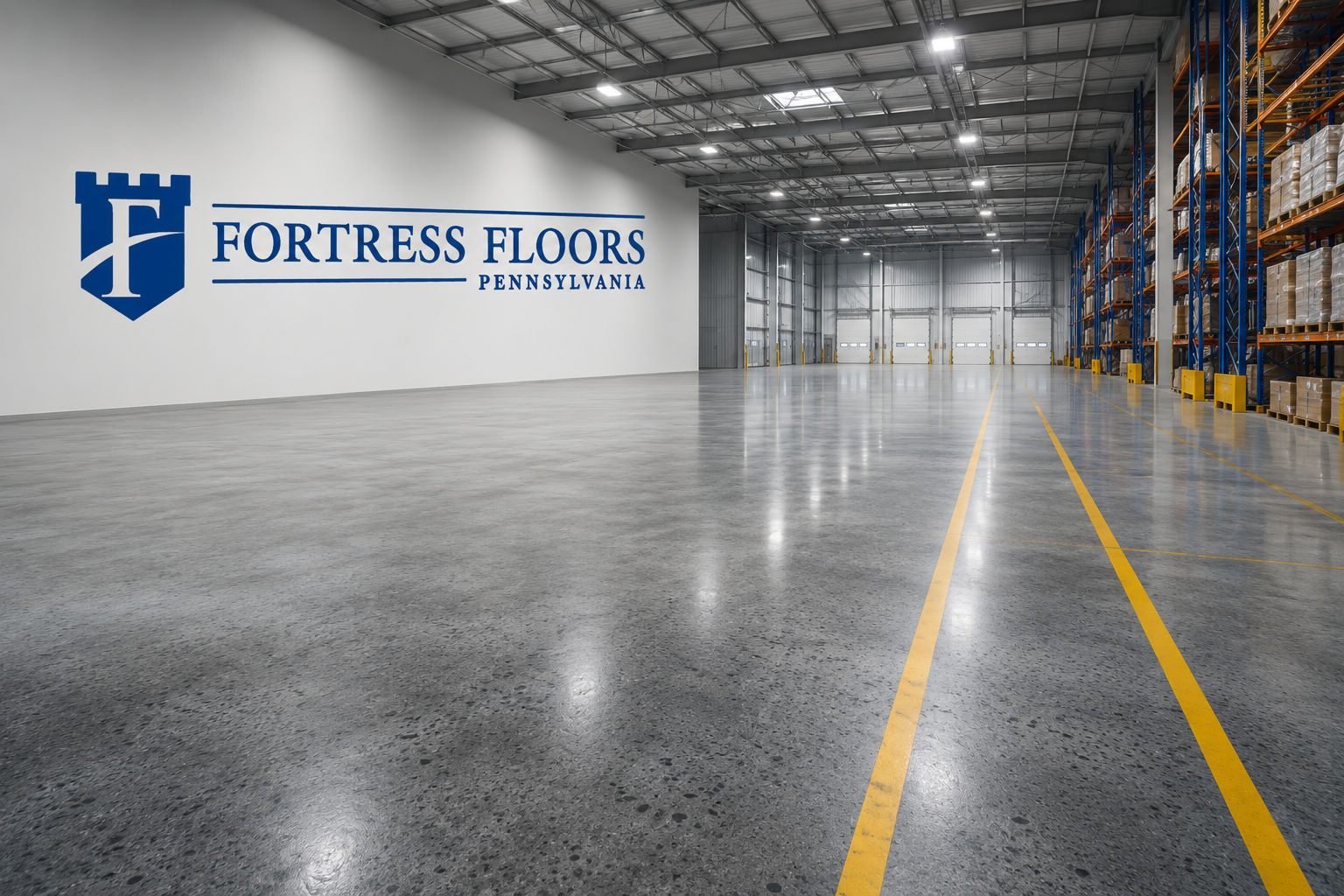
Here’s something most people don’t realize: the best coating in the world will fail if the preparation work isn’t done correctly. Most commercial floor coating failures trace back to what happened before the coating was ever applied.
A professional installation covers every step that actually determines whether the coating holds:
- Surface profiling: The concrete gets mechanically ground so the coating has something to grip. Without this, you’re relying on surface adhesion alone, and that doesn’t last.
- Contaminant removal: Oils, old coatings, and chemical residues have to be fully removed first. Coating over them locks the problem in rather than solving it.
- Crack and spall repair: Weak spots in the slab get filled and leveled before the coating goes down, not after.
- Moisture assessment: Vapor transmission through the slab is tested because moisture from below is one of the most reliable ways to cause a coating to fail, and it’s often invisible until it’s already done the damage.
- Proper application thickness: Too thin and the coating won’t hold up to the traffic you put it through. Applied unevenly and you get inconsistent wear and early failure points.
Getting it right the first time is genuinely less expensive than pulling up a failed system and starting over.
Keeping Your Floor in Good Shape Once It’s Done
A properly installed coating is not high maintenance. A few simple habits will keep it looking and performing well for years:
- Sweep or dust mop daily to clear grit that acts like sandpaper on the surface over time
- Mop with a pH-neutral cleaner for regular maintenance because strong acids or bleach-based products will dull the finish with repeated use
- Clean up spills quickly, especially oils and chemicals, even though the coating can handle them
- Use protective pads under heavy equipment that sits in fixed positions for extended periods
- Have a professional take a look every few years to catch any early wear before it becomes a real repair
That’s genuinely all it takes to get the most out of your investment.
Ready to Stop Guessing and Get It Done Right?
Your warehouse floor takes a beating every single day. Choosing the right industrial floor coating means thinking through your specific conditions honestly, asking the right questions of any contractor you consider, and not cutting corners on the preparation work that actually determines how long everything holds.
If your floor has been on your mind lately, it’s probably time to have someone take a proper look at it. Fortress Floor Coatings of Pennsylvania works with warehouse owners and facility managers across the region to find the right solution for each space, installed correctly the first time.